India Launches Its First Hydrogen-Powered Train, Marking a Major Leap Towards Green Rail Transport
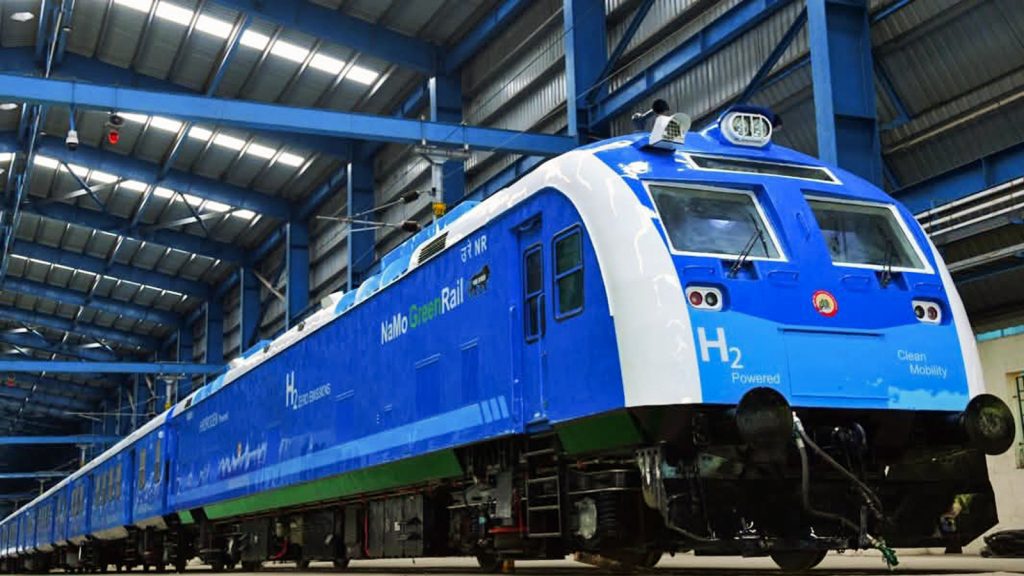
India has officially entered a new chapter in sustainable transportation with the launch of its first indigenously developed hydrogen-powered train. The milestone positions the country among a select group of nations exploring hydrogen fuel cell technology for railways, reinforcing India’s commitment to cleaner mobility and reduced carbon emissions.
The pioneering project represents a significant step in modernizing Indian Railways while supporting the nation’s long-term environmental and energy goals.
A New Era for Indian Railways
Unlike conventional diesel locomotives, the new train is powered by hydrogen fuel cell technology, which generates electricity onboard through a chemical reaction between hydrogen and oxygen. The only by-products of this process are water and heat, making it a cleaner alternative to fossil fuel-powered trains.
The train is scheduled to begin operations on the Jind–Sonipat section under Northern Railway, serving as a pilot project to evaluate the practicality of hydrogen-powered rail transport in Indian conditions.
Built in India, Designed for the Future
The hydrogen train has been designed and developed entirely in India, following technical standards prepared by the Research Designs and Standards Organisation (RDSO).
The project aligns closely with the government’s Atmanirbhar Bharat initiative by showcasing India’s growing capability to develop advanced transportation technologies domestically.
In addition to the train itself, the project includes dedicated hydrogen storage systems, refuelling infrastructure, and operational support facilities required for safe day-to-day operations.
Why Hydrogen Trains Matter
Hydrogen-powered trains offer several advantages over traditional diesel locomotives:
Zero direct carbon emissions during operation.
Significantly lower environmental impact.
Reduced dependence on fossil fuels.
Quieter and more energy-efficient operation.
Potential to serve non-electrified railway routes sustainably.
As countries around the world search for cleaner transportation solutions, hydrogen is increasingly viewed as one of the most promising alternatives for rail networks that are difficult or expensive to electrify.
India Joins a Global Club
With this launch, India joins countries such as Germany, Japan, China, and the United States, all of which are actively researching or operating hydrogen-powered trains.
Although the technology is still in its early stages globally, India’s pilot project is expected to provide valuable operational data that could shape future railway modernization efforts across the country.
If successful, hydrogen-powered trains could eventually become an important part of India’s strategy to reduce emissions while expanding sustainable public transportation.
More Than a Train—A Technology Demonstration
Beyond carrying passengers, the project serves as a real-world demonstration of hydrogen fuel technology in one of the world’s largest railway networks.
Engineers will monitor:
Operational efficiency.
Fuel consumption.
Reliability under Indian weather conditions.
Maintenance requirements.
Long-term economic viability.
The insights gained could help determine whether hydrogen technology can be deployed on additional railway routes in the coming years.
Geeksterr’s Take
India’s first hydrogen-powered train is more than a technological milestone—it represents the country’s growing ambition to lead in sustainable transportation. While widespread adoption will depend on infrastructure development, production costs, and operational performance, the launch demonstrates that Indian Railways is actively exploring next-generation mobility solutions. If the pilot proves successful, hydrogen-powered trains could play an important role in building a cleaner, greener future for India’s rail network.